
Anxiety is a normal emotion which many people experience prior to uncomfortable or unknown situations such as test taking or making a major life decision. Excessive anxiety, or anxiety which prevents you from accomplishing a goal, is not only physically uncomfortable, but it can have serious consequences.
For those with dental anxiety, the emotion can actually lead to significant health risks, including gum and mouth diseases and loss of teeth. If you have been putting off a visit to the dentist for months or even years because of dental anxiety here are some tips that may make it easier for you to face your fears and take action to improve your oral health.
First, recognize that you are not alone in your fear and discuss your fear with your dentist.
About 20% of people experience enough anxiety that they will go to the dentist only when absolutely necessary according to Peter Milgrom, DDS, the director of the Dental Fears Research Clinic at the University of Washington in Seattle and author of Treating Fearful Dental Patients.
Dr. Milgrom also estimates that between 5 and 8 percent of Americans actually avoid dentists out of fear.1 It is important to make your dentist and your dental team aware of your anxiety. This puts you in control, which is often key to becoming more comfortable in any anxiety-filled situation.
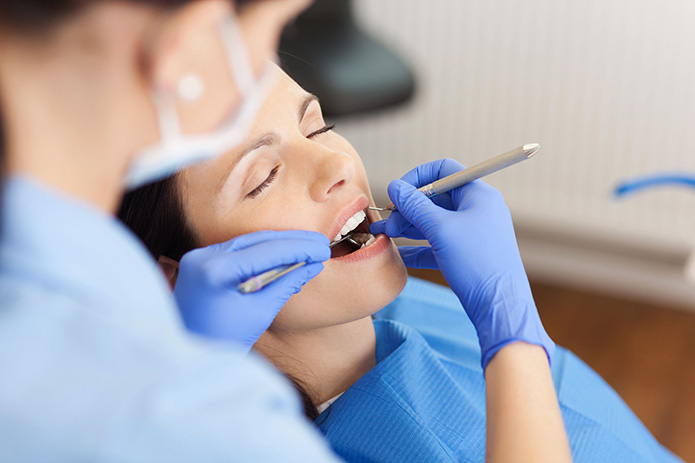
“Fear of dentists stems not so much from the experience of pain as from the lack of control that patients experience in the dentist’s chair,” says Ellen Rodino, PhD, a psychologist in Santa Monica, Calif., who has studied dental fear.2 “You’re lying prone, a dentist is hovering above you, and he’s putting you in a situation where you can hardly talk or respond. That creates a lot of anxiety for some people because they don’t feel in control.”
To bolster your feeling of being in control you should discuss the following with your dentist and dental team: 1) Your ability to leave anytime want; 2) An agreed upon hand signal that you can use when you want the dentist to stop what they are doing and give you time to relax; 3) An explanation by the dentist of what they will be doing, how long it will take and how much discomfort they anticipate you will feel; 4) The responsibility of the dentist to ask your permission to proceed before moving on to the next phase of treatment; and 5) The cost of your care and options for paying for that care, including any available payment plans.
Feeling comfortable with your dental team is also an important way to alleviate fear. You can schedule an appointment to meet the dentist and the dental team without having to have any dental work done. At this appointment, you can ask questions about their qualifications and get their suggestions on ways they can help make the experience as relaxing as possible for you.
If you are comfortable with the dentist and the team, set up an appointment for a simple procedure such as an oral exam. Go to your first visit with someone you trust and have them stay with you during treatment. Bring your headphones and music player with you to the dental visit and listen to your favorite music during the procedure. This trick can also block out or minimize other sounds in the dental office, such as dental drilling, which can cause you anxiety.
Using relaxation techniques can also be helpful. The simplest technique is to take a deep breath, hold it and then let it out very slowly. “This will slow your heartbeat and relax your muscles,” says Dr. Milgrom. Another technique he recommends is progressive muscle relaxation, which involves tensing and relaxing different muscle groups in turn.3
Visualization techniques are also helpful in reducing anxiety. In an article written for PsychologyToday.com by Kristen Bottger on How to Overcome Dental Anxiety the author recommends two books that may be helpful — Code to Joy by George Pratt and Peter Lambrou and When Panic Attacks: The New Drug-Free Anxiety Therapy That Can Change Your Life.4
Seeking professional help, such as that provided by a licensed therapist or psychologist, is also an option for understanding and overcoming your dental anxiety.
There are also medications which the dentist can administer to make you more comfortable. Those medications range from laughing gas (nitrous oxide) to sedation dentistry. There are also technologies which make injections completely comfortable (even undetectable if done correctly).5
The worst thing you can do is to let dental fear stop you from getting the care you need. Dr. Kenyon Glor, a dentist in Ohio summarized it best in an online article, Easing Dental Anxieties: Getting to the Root of the Problem, at www.Humana.com, when he said, “The biggest effect on dental health is avoidance of care. Simple things become more complicated and expensive.”6
Sedki Dentistry, Commerce MI is a complete family dental clinic that offers sedation dentistry and services for all dental health concerns. Call Sedki Dentistry today and get started on a healthy, beautiful smile without anxiety!
___________________
1,2, 3 Don’t Fear the Dentist: Experts Share Tips to Help You Overcome Your Fear of the Dental Chair, by Richard Sine, WebMD.com
Link: https://www.webmd.com/oral-health/features/dont-fear-the-dentist
4 How to Overcome Dental Anxiety by Kristen Bottger with Leon Seltzer, PsychologyToday.com
Link: https://www.psychologytoday.com/us/blog/evolution-the-self/201802/how-overcome-dental-anxiety
5, 6 Easing Dental Anxieties: Getting to the Root of the Problem, Humana.com
Link: https://www.humana.com/prevention-and-care/healthy-living-and-prevention/dental-health/dental-anxiety