
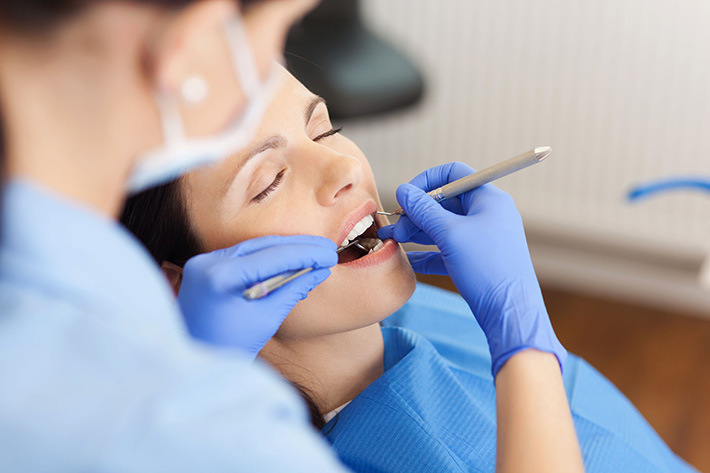
The dentist can be one of the most stressful medical visits for even the heartiest among us. The thought of sitting in the chair, opening your mouth to drills and metal tools, and pretending you don’t feel a thing can be excruciating for people. That’s part of why sedation dentistry has become so popular as a way to tackle the anxiety of dropping into the dentist’s chair and opening up your mouth to whatever poking, prodding, or cavity filling may come.
Through use of supervised medication, sedation dentistry allows you to relax throughout a dental procedure.
This is done with simple medication, the same medication used for those undergoing surgical procedures, at different levels depending on how sedated you need to be. It allows you to relax and even enter a sort of sleep while the procedure is going on to keep you calm and free of any anxiety induced by sounds during the procedure.
Below is some information on sedation dentistry and how it can help you tackle any dental anxiety you have.
What is sedation dentistry?
This form of dentistry utilizes general anesthesia to put you in a relaxed, and even partially sleep, state prior to a dental appointment. There are different levels of sedation you can utilize based on the procedure and your level of anxiety, including minimal sedation (awake but relaxed), moderate (awake but slowed brain function and some word slurring), deep (edge of consciousness, also called “twilight sleep”), and full general anesthesia (full unconsciousness).
How is the sedative administered?
There are a few different ways sedatives can be administered prior to a procedure. The most common form of administration is inhaled sedation, also known as laughing gas, which is the most minimal form of sedation. Oral sedation can be used for minimal to moderate sedation, given as a pill. An IV can administer a moderate sedative and general anesthesia is administers via inhalation. For any injectable form of administration, you’ll also likely get a local anesthetic for the injection site.
Who is sedation dentistry good for?
Anyone with anxiety or fear of the dentist to the level that it becomes a problem (such as losing sleep, racing heart, sweating, or other symptoms) can benefit from sedation at the dentist. Anyone who has a low pain threshold, can’t sit still for an extended period of time, has a bad gag reflex, or needs a large amount of dental work should consider sedation dentistry to help them through the visit.
Related Questions
What is the difference between sedation dentistry and sleep dentistry?
These are generally the same thing. Sedation dentistry, as a default, does not automatically mean you are asleep, but these terms are often used interchangeably.
Do I need to see a specialist for sedation dentistry?
Most dentists are certified and capable of administering low levels of sedation but someone with special training may need to be used for moderate sedation and an only anesthesiologist can administer general anesthesia and must be present at any procedure for the duration.
If you are anxious or have anxiety about dental procedures, talk to your dentist about your options when it comes to sedation dentistry today!
Dr. Sedki and his experienced staff, have extensive training in sedation dentistry. Our Commerce Twp. dental practice combines technology and comfort, providing safe and effective dental treatment. With more than 20 years of experience in general and cosmetic dentistry, dental treatments, gum rejuvenation, children’s dentistry and more, you are in good hands at Sedki Dentistry. Call for a Free Consultation today!